

Migration Matters #29
Dear Reader,
We bring you the most exciting and insightful trends from the world of migration - the stories that matter, the events that made headlines and interesting resources you can check out. In this edition, you’ll read about the findings of NSSO’s latest survey on migration, an exciting panel discussion on migration and climate change, IOM’s insightful handbook for governments on migrant workers, a new migration portal by Latin America and much more. Don’t forget to check out our Good Finds section for some interesting book/podcast recommendations!
If you like this roundup that we’ve specially curated for you, please share it with your family and friends! You can also tweet to us at @NowMigration
Must Read
NSSO’s Multiple Indicator Survey out!
The findings of the Multiple Indicator Survey by National Sample Survey Office’s (NSSO) reveal that in 2020-21, only 1 percent of women migrated from their hometowns to other places for employment purposes, while 87 percent of women migrated due to marriage. Contrast this to men: 50 percent migrated for employment purposes, 8 percent moved due to study-related reasons, and 1 percent shifted due to socio-political problems. The objective of conducting the Multiple Indicator Survey is to gather information on migration in the country and use data for developing estimates for SDG indicators, and construction of houses for residential purposes.
IOM’s new initiative on Gender and Migration
GenMig or Gender and Migration Research Policy Action Lab is a new multi stakeholder initiative launched under the leadership of International Organization for Migration (IOM) Deputy Director General of Operations. Focused on research for supporting gender-responsive policies, programming and practices in migration, it aims to improve gender equality within the migration process. It is a highly collaborative network that brings together global partners from research institutions, governments, NGOs and the private sector for achieving its goal.
India
Online Panel Discussion on Migration and Climate change was held on 28 March, 2023 by the RGNIYD Regional Center, Chandigarh in collaboration with IIMAD, Kerala. The panelists included Prof. S. Irudaya Rajan, Founder Chair, IIMAD; Prof. Ram B. Bhagat, HoD, Migration and Urban Studies, IIPS, Mumbai; and Dr. Benoy Peter, Co-Founder & ED, CMID, Kerala. The panel discussed the link between migration and climate change, possible challenges and the way forward. Other points of discussion were environmental refugees, the interplay of climate change and our socio-economic capacity to adapt to it, the role of urban policy frameworks and rehabilitation of climate migrants.


Tasmida Johar became India’s first female Rohingya graduate. In her interview to AlJazeera, she wished that every woman in her community got a chance to pursue their career: “It makes me sad that I am the first one to do this when so many Rohingya women wanted to come to this position but they could not.” You can read her journey in this book by Neal Prakash. The Rohingya, a persecuted Muslim minority from neighbouring Myanmar underwent a brutal military attack in 2017. Most fled to Bangladesh, turning Cox’s Bazar district into the world’s largest refugee camp. You can read more about India's stance on the community here.
A new report “The Invisibles: Towards a Seasonal Migration Atlas of India” released by the Centre for Labour Research and Action takes a close look at seasonal or circular migrants, and semi-permanent or long-term circular migrants during the first COVID-19 lockdown in 2020. It highlights that 13.5 million migrant workers returned to their home states during this phase. Maharashtra and Gujarat were the largest recipients of migrant workers followed by Kerala, Tamil Nadu, Karnataka, and Telangana. The data was collected through state-level macro data sets and micro-level studies at the district/sub-district level. Primary sources of data like Shramik Train Data were also explored.
Global
IRIS Handbook is IOM’s flagship global guidance tool for governments on ethical recruitment and migrant worker protection. It provides guidance to governments on how to integrate, mainstream and prioritize ethical recruitment in cooperate activities. The guidance is in the form of negotiators, regulators, inspectors and consular officials at national and international level. It focuses on Montreal Recommendations on Recruitment: A Road Map towards Better Regulation with the idea of improving regulations and protection of migrant workers.
KNOMAD and UNDP jointly hosted a hybrid event on March 22, 2023 for the dissemination of the report titled “Turning the tide on internal displacement: A development approach to solutions”. The report offers fresh insights into the challenges of internal displacement and provides critical thinking on the innovative approaches for addressing its effects through development.
The “Australia-India Education Qualification Recognition Mechanism'' was finalised between India and Australia. As part of the mechanism, Indian Degrees will now be recognised in Australia, and vice-versa. Additionally, the Australian Prime Minister announced the ‘Maitri Scholarship’ for Indians to study in Australia with financial assistance for 4 years.
Latin America & the Caribbean Migration Portal is a newly created website that tracks immigration policy developments in Latin America and the Caribbean. It presents authoritative research, data, and analysis from Migration Policy Institute (MPI), governments, international organizations, researchers and civil society. The Migration Portal is available in both English and Spanish.
Good Finds
The Center on Migration, Policy and Society (COMPAS) is a research center at the University of Oxford. It has established an international reputation for original research and policy relevance; undertakes research, publications and user engagement activities with academic and non-academic users. The team at COMPAS has published a list of the best books on migration on their website. Check it out!
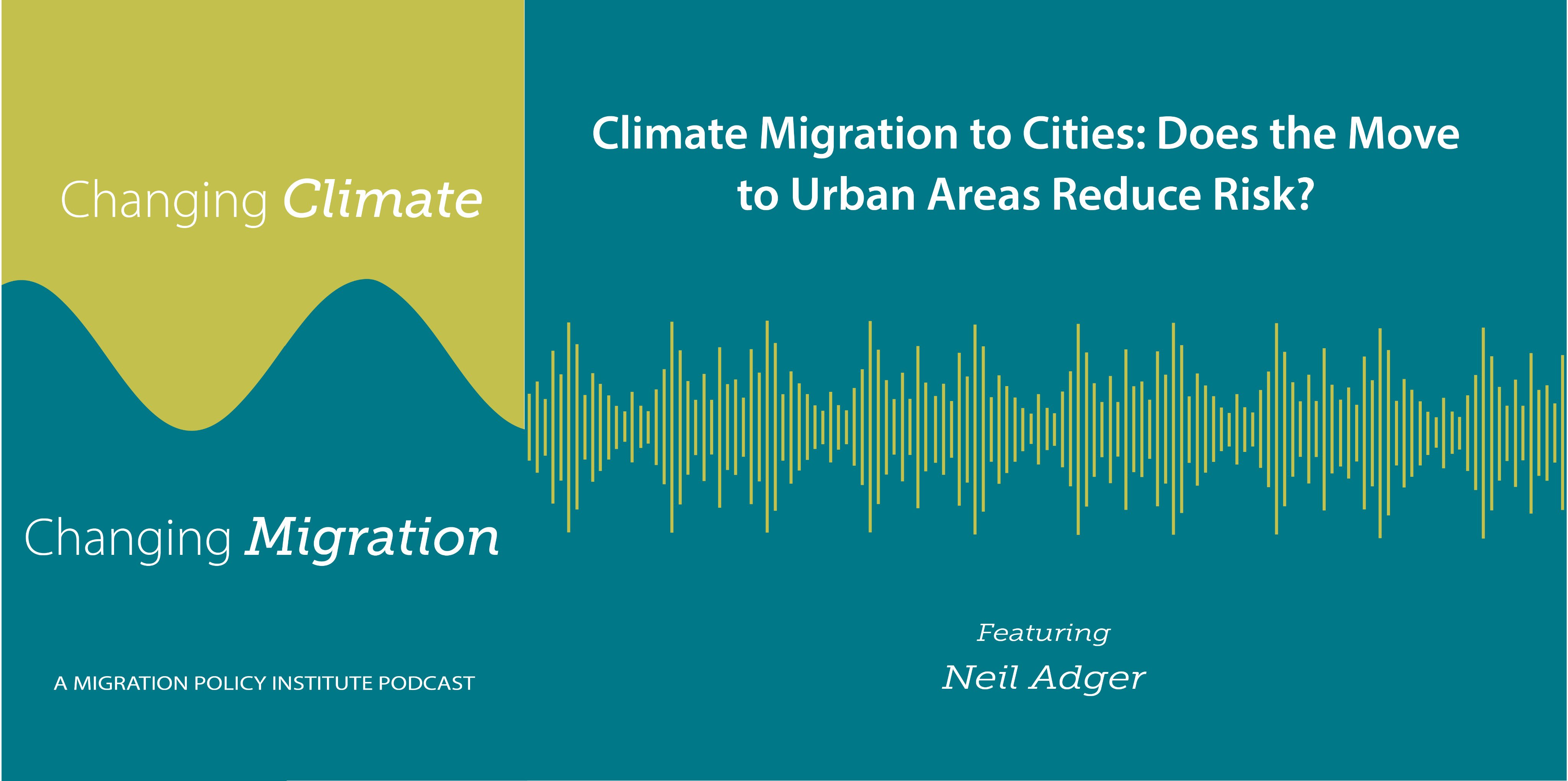
The podcast Changing Climate, Changing Migration by Migration Policy Institute examines the connection between climate change and migration while describing the impact of climate change on human mobility. It traces the effects of climate change on migrants, refugees, and communities. Episodes range from legal pathways for climate migrants to benefits and possible futures of climate migration.
Thank you, we will see you again next month!
Best Wishes,
The IMN Team
Research and Drafting: Deon Sajan
Editorial Support: Pooja Bhatia
If you enjoyed this issue of Migration Matters, do share it with your friends and family. Any feedback is welcomed at communications@indiamigrationnow.org.